How to generate revenue with FX fees
Every time a customer pays in a foreign currency, there is revenue potential. What looks like a small background fee can quickly add up to a steady income stream.

Pliant’s digital cards are built for international payments. They make it easy and comfortable for customers to spend abroad. For companies, this means that as global card spend increases, so does FX revenue. The more international activity your customers have, the stronger this revenue stream becomes.
What are FX fees?
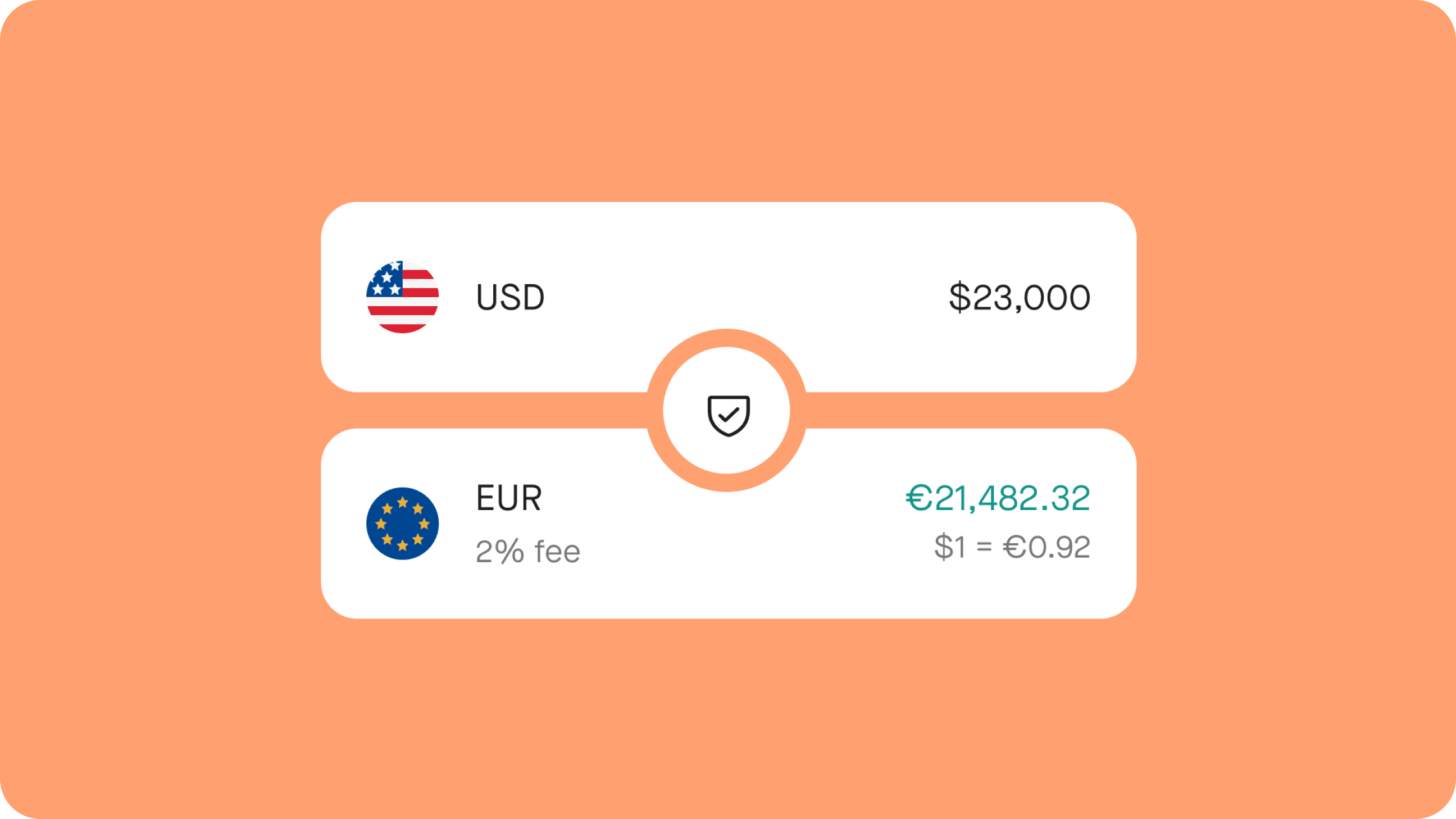
Whenever a card transaction involves two different currencies, a small FX fee is applied. At Pliant, this typically means percentage-based fees: a fee calculated as a percentage of the amount being converted. For smaller purchases, the impact may feel negligible, but for larger transactions these fees can add up quickly and generate meaningful revenue.
The exact fee depends on several factors, including the type of card, the currencies being exchanged, the payment method, and the region where the transaction takes place.
For companies that issue cards, FX fees add another revenue stream on top of interchange. Each international transaction not only provides a service to the customer but also creates incremental income.
Why FX revenue matters for businesses
Like interchange, FX fees create a recurring income stream. The difference is that FX revenue grows directly with international activity. For companies whose customers spend abroad, this can quickly become an important addition to their business model.
FX revenue adds stability because it scales with everyday usage. As customers travel, pay suppliers overseas, or rely on a growing number of tools from abroad such as ChatGPT, Jira, or other SaaS platforms billed in US dollars, every transaction generates value.
The way companies capture FX revenue depends on their role in the payment chain. SaaS and ERP platforms that embed cards into their product can turn international payments into an additional source of income alongside subscriptions. For banks and financial institutions, FX fees are already part of the equation. The opportunity lies in enabling more international card usage and designing fee structures that balance competitiveness with profitability. In both cases, the logic is straightforward: the more global the spending patterns of their customers, the stronger the FX revenue impact.
How Pliant’s digital cards simplify international payments
To see the impact from the perspective of an end customer, look at Prianto PPM. Prianto is an IT reseller that procures software worldwide for large and mid-sized system houses. Their business requires frequent purchases in US dollars and other currencies, which previously exposed them to exchange rate fluctuations. To protect themselves, they sometimes relied on financial hedging instruments — locking in future exchange rates to reduce risk. This added extra complexity and administrative effort to their daily operations.
With Pliant’s virtual cards, Prianto has been able to simplify international payments. Transactions are settled directly at the daily exchange rate, which reduces the need for hedging and makes cross-border purchases more predictable.
"Hedging is always a very difficult thing to track. How much are you going to pay now in dollars and how much are you going to get later from the client. Of course, this is easier with the credit card, because the exchange rate on the day of the purchase is used. This means that I have fewer losses on the currency side."
For customers like Prianto, Pliant cards simplify the complexities of international payments. For platforms and banks offering these cards, every transaction like this generates FX revenue.
What FX revenue can look like in practice
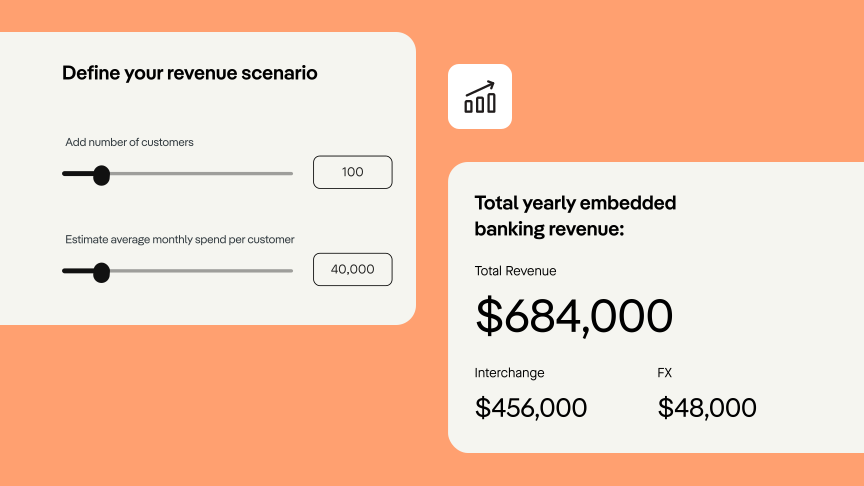
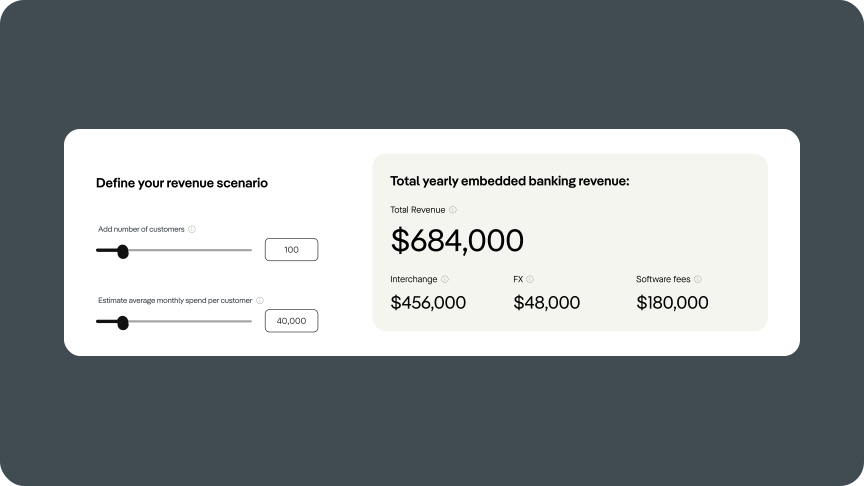
To understand the potential of FX fees, it helps to look at a simple example. Imagine a platform with 100 customers, each spending an average of $40,000 per month on their card. Over the course of a year, this results in a total embedded banking revenue of $684,000.
Of this amount, $48,000 comes from FX fees alone. That’s revenue generated simply by enabling customers to make international payments with a digital card.
This example shows how quickly FX fees add up, especially for companies whose customer base has significant international spend. What may look like a small percentage on a single transaction can become a meaningful revenue stream at scale.
Every global transaction can grow your revenue
FX fees are not just a small extra charge. They are a way for businesses to benefit directly from their customers’ global activity. With Pliant’s digital cards, companies can capture this value while offering customers a seamless way to pay worldwide.
Curious how much revenue you could generate? Try our Revenue Calculator today and start planning your growth. Reach out to our team to get a clearer view of your revenue potential based on your specific setup.