Upstream fraud prevention: the importance of real-time controls
Insurance fraud is changing. With AI-generated invoices, synthetic identities, and automated resubmissions, insurance fraudsters now move at superspeed. Yet many insurers still rely on reactive controls and legacy systems: scanning documents, reconciling spreadsheets, and investigating claims only after funds have left the account. In this environment, traditional fraud detection is always one step behind.

- The new face of insurance fraud
- What are real-time fraud controls for insurance payments?
- What are compliance requirements for fraud prevention in insurance?
- How does real-time claims data help insurers detect fraud?
- How can insurers prevent fraud in real time without slowing down claims?
- Case Study: How Medigo and Pliant Reduce Fraud Through Real-Time Claims Controls
- Learn how Pliant prevents fraud at the point of payment
This is why upstream fraud prevention has become mission-critical. By embedding real-time controls directly into the payment flow, insurers can shift from fraud detection as a back-office function to detecting misuse at the moment of transaction. Instead of trying to recover losses after the fact, real-time controls allow insurers to prevent misuse before money moves.
To help insurers navigate the evolving fraud landscape, this article answers the key questions around insurance fraud, upstream fraud prevention, and how real-time controls can reduce risk without slowing down claims.
We’ll cover:
The new face of insurance fraud
What are real-time fraud controls for insurance payments?
What are compliance requirements for fraud prevention in insurance?
How does real-time claims data help insurers detect fraud?
How can insurers prevent fraud in real time without slowing down claims?
The new face of insurance fraud
Technology plays an enormous role in modern insurance fraud: it’s easier than ever for bad actors to push fraudulent claims through already overloaded systems. In the U.S. alone, insurance fraud costs an estimated $300+ billion annually (Coalition Against Insurance Fraud).
When it comes to fighting back, many insurers are far behind. Traditional claims workflows were built for documentation, not detection, and they struggle to catch fake claims, manipulated invoices, or duplicate submissions sent to multiple insurers. At scale, and with millions of claims flowing through systems every year, it becomes nearly impossible to distinguish legitimate transactions from subtly altered or fabricated ones using manual reviews alone.
As a result, fraud is often accepted as a cost of doing business rather than a preventable risk. Most cases persist not because they’re undetectable, but because legacy systems lack real-time visibility and control. What the industry needs is a shift in mindset: moving from chasing fraud after the fact to designing payment and claims systems that make fraud significantly harder (or impossible) before money ever leaves the insurer’s account.
What are real-time fraud controls for insurance payments?
Real-time fraud controls are mechanisms that evaluate and enforce fraud rules at the moment a payment is initiated, not after a claim has been processed or reimbursed. Instead of relying on post-payment audits, insurers apply controls directly within the payment flow, ensuring funds can only be used in line with the approved claim, policy terms, and provider credentials.
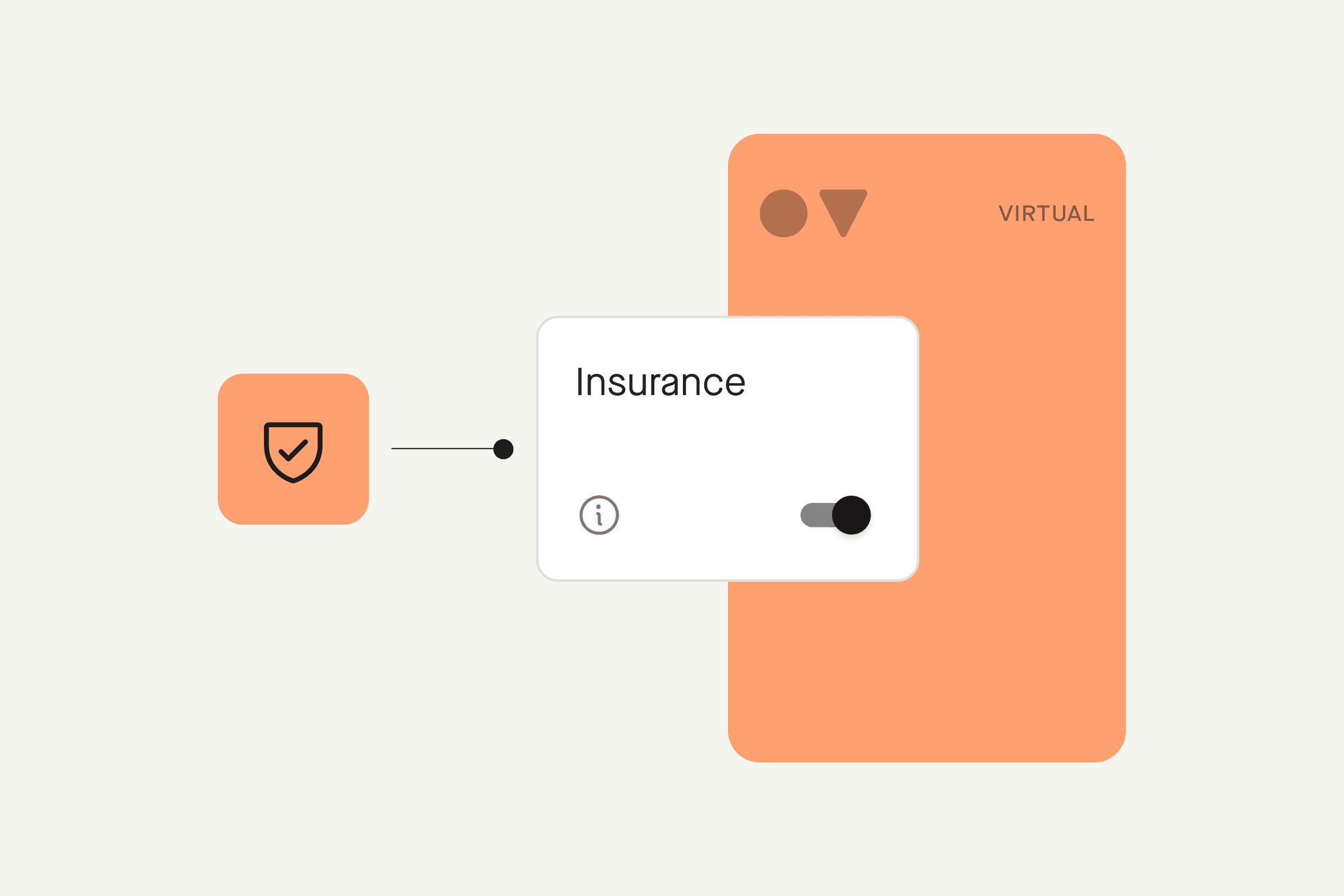
In practice, real-time fraud controls include virtual, programmable payment cards, combined with dynamic rules. These rules can restrict spend by amount, time window, geography, merchant type (via MCCs), or even individual providers. Transactions are validated in milliseconds against these parameters, and any deviation, such as an unapproved merchant or inflated amount, is automatically declined.
For insurers, this approach transforms payments into an active control layer rather than a passive settlement step. Every transaction generates structured, real-time data that can be monitored, logged, and analyzed across claims. The result is faster payouts for legitimate providers and members, while fraudulent or non-compliant transactions are blocked instantly: increasing control without slowing down the claims process.
Time to act? Why all insurers should consider real-time controls
For many traditional insurers and TPAs, fraud prevention doesn’t always feel like the most urgent problem. Premium collection, FX exposure, reconciliation, and operational complexity often take priority, especially in global programs. But as claims and payments become faster and more digital, fraud quietly shifts from a background issue to a compounding cost.
Fraud can account for up to 10% of total claims spend, and that risk increases as manual processes are replaced with instant payments and automated workflows. When controls lag behind payment speed, insurers don’t just face higher fraud losses, they inherit reconciliation gaps, compliance exposure, and deteriorating customer trust. Once funds are paid out, recovery is slow, expensive, and often unsuccessful.
Real-time controls address this inflection point directly. By embedding fraud prevention into the payment flow, insurers don’t have to choose between speed and safety. The same infrastructure that enables instant, global payouts also enforces spend rules, captures clean transaction data, and simplifies reconciliation across currencies and markets. In a landscape where efficiency and trust define competitiveness, real-time controls are no longer optional, they’re foundational.
What are compliance requirements for fraud prevention in insurance?
Compliance requirements for fraud prevention in insurance are designed to ensure that insurers can detect, prevent, and document fraudulent activity while meeting regulatory obligations around transparency, data protection, and financial crime prevention. These requirements vary by jurisdiction, but typically include obligations related to AML and CTF controls, sanctions screening, KYC/KYB, data retention, auditability, and regulatory reporting.
In practice, regulators expect insurers to demonstrate that they have effective controls embedded in their operational processes, not just policies on paper. This includes the ability to trace payments back to a specific policy and claim, enforce spending authorizations, monitor transactions for anomalies, and maintain tamper-proof audit trails. Manual reviews and post-payment checks alone are increasingly seen as insufficient, especially as claims volumes grow and payments accelerate.
Real-time, programmable payment controls help insurers meet these expectations by embedding compliance directly into the payment flow. Structured transaction data, rule-based approvals, and automatic enforcement of provider and spend restrictions create a clear, auditable record of why a payment was approved or declined. This approach supports regulatory reporting, simplifies audits, and ensures fraud prevention and compliance are applied consistently.
How does Pliant address compliance concerns while automating fraud prevention?
Pliant’s approach to fraud prevention is built to embed compliance directly into the payment process, rather than treating it as a separate, manual layer. Programmable payments enforce AML, KYC/KYB, sanctions, and policy rules in real time, with every transaction generating structured, auditable metadata that clearly links payments to claims, providers, and policies.
This creates transparency by default and simplifies regulatory reporting across jurisdictions. At the same time, automation doesn’t eliminate human oversight, it supports it. By handling enforcement at the rails, Pliant allows compliance and operations teams to focus on exceptions, complex cases, and local regulatory nuances where human judgment and support are still essential.
How does real-time claims data help insurers detect fraud?
Real-time claims data changes fraud detection from a post-payment investigation into a continuous control process, where inconsistencies are spotted as payments happen — not weeks later.
The claim is anchored at the moment of service: When payment is tied directly to a claim, policy, and member, insurers establish a trusted starting point before any documentation is submitted or manipulated.
Payment generates structured data instantly: Instead of PDFs or scanned receipts, insurers receive real-time transaction data (provider identity, merchant category, location, amount, timestamp) creating immediate visibility into what’s actually happening.
Mismatches surface as signals, not audit work: If the provider type, amount, geography, or timing doesn’t align with the claim, the issue is flagged immediately rather than buried in a backlog of reviews.
Duplicate and reused claims become detectable: Consistent, real-time identifiers make it possible to spot repeated patterns, near-duplicates, and claims submitted to multiple insurers: scenarios that are hard to catch with document-based workflows.
Investigations focus only on true anomalies: By filtering out compliant transactions automatically, insurers spend less time reviewing legitimate claims and more time acting on suspicious behavior.
How can insurers prevent fraud in real time without slowing down claims?
Preventing fraud in real time doesn’t mean adding more checks or friction. It means moving control upstream and automating decisions that don’t require human judgment. When fraud prevention is embedded directly into the payment process, legitimate claims move faster.
First, insurers predefine the rules before a payment is ever attempted. Claim-specific limits, approved provider types, geographies, and time windows are set upfront, so compliant transactions pass automatically. There’s no queue, no manual review, and no delay for members or providers.
Second, enforcement happens instantly. Payments that meet the rules are approved in milliseconds. Only transactions that deviate – wrong merchant type, unexpected amount, unusual timing – are stopped or flagged. This flips the traditional model from “review everything” to “only review exceptions.”
The result is a system where fraud is blocked upstream, claims settle faster, and customer experience improves, without sacrificing compliance or oversight.
Case Study: How Medigo and Pliant Reduce Fraud Through Real-Time Claims Controls
Medigo, a Berlin-based healthcare services provider, faced increasing fraud exposure due to fragmented, manual claims workflows. Delayed documentation, post-payment reviews, and limited real-time visibility created gaps where duplicate or manipulated claims could pass through undetected. As volumes grew, these blind spots increased both fraud risk and write-offs.
By partnering with Pliant, Medigo embedded fraud prevention directly into its claims and payment flow. Claims are automatically categorized and linked to programmable payment cards that restrict spend to approved medical facilities, disable ATM withdrawals, and enforce claim-specific rules in real time. Each transaction is validated using structured data and network-level controls, including Visa’s fraud detection capabilities, turning every payment into a real-time fraud checkpoint before funds are released.
The impact was immediate and measurable. Medigo reduced claim processing time by 45–50%, shrinking the window for fraud while improving oversight and financial stability. Fraudulent behavior declined as misuse was blocked at the point of payment rather than investigated after the fact, demonstrating how upstream controls can reduce fraud without slowing down claims.
Learn how Pliant prevents fraud at the point of payment