Inside Circula and Unzer's playbook for building vs. embedding card programs
Two platforms. Two different starting points. The same decision: whether to build card issuance in-house, or embed it.

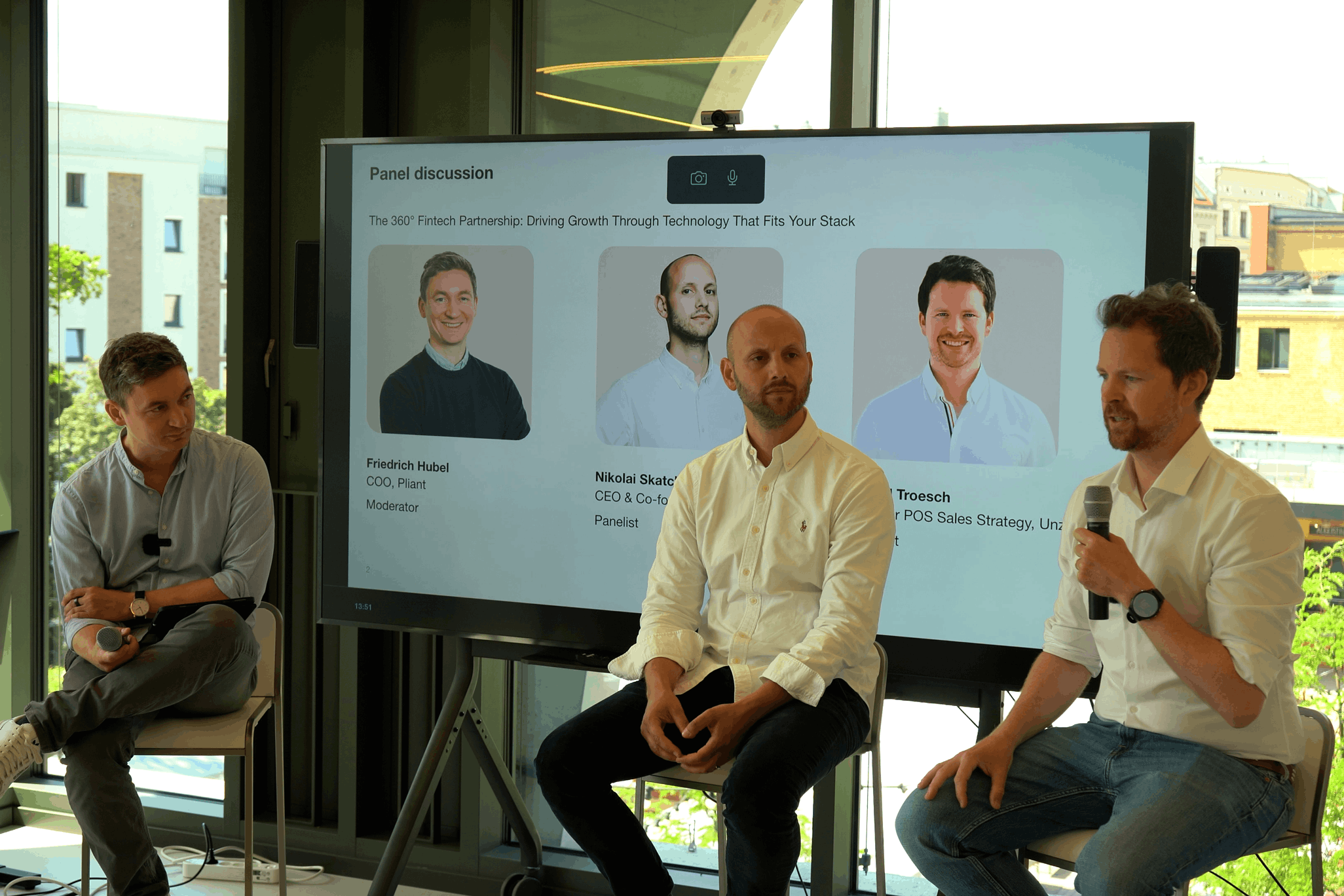
At a recent Pliant partner masterclass, The 360° Fintech Partnership, Circula founder and CEO Nikolai Skatchkov and Unzer's Daniel Troesch sat down with Pliant COO Friedrich Hubel to walk through how they made that call, and what happened after they did.
We'll cover:
Why an expense platform and a payment infrastructure provider arrived at the same build-or-partner decision from opposite directions
The two different integration paths they chose, and why neither copied the other
What actually moved after launch: retention, revenue, and deal-closing power
Three takeaways for any platform weighing the same decision today

Two starting points, one same conclusion
Circula and Unzer had almost nothing in common going into this decision.
Circula, founded in 2017, is an expense management platform serving around 3,000 companies in Germany, with a sweet spot around mid-market Mittelstand businesses running on tools like DATEV and Personio. Cards weren't part of the original plan.
They had actually tried the reverse model early on: building a white-label product and pitching it to banks, including a proof of concept with HypoVereinsbank. It didn't get traction. Without deep integration into an existing card stack, Circula was just another software vendor, not an infrastructure partner. So the team pivoted, built its own brand, and focused on expense management first, adding cards only once the core product had real market fit.
Unzer came at it from the opposite side. It runs payment infrastructure across Germany, Austria, and Denmark, processing for somewhere between 80,000 and 85,000 merchants: pharmacies, restaurants, retailers, gastronomy. That's a POS market that was becoming a commodity fast, hard to create value from the transaction alone.
Onboarding a merchant is expensive: KYC checks, compliance reviews, the heightened scrutiny the industry has operated under since Wirecard. Unzer had already paid that cost per merchant. The only way to get more value out of the relationship was to add something on top of the payment itself.
Both companies also felt the same competitive pressure, from different directions. Circula watched startup-focused players like Pleo and Moss move fast on prepaid cards, aimed at a segment Circula wasn't chasing. Unzer watched SumUp expand out of small-business payments into more aggressive territory. Neither threat was existential yet. Both were reason enough to move before it became one.
Same decision, two different integration paths
Deciding to partner instead of build was the easy part. What each company built on top of that decision looked completely different.
| Circula | Unzer | |
|---|---|---|
| Starting point | Expense management platform, no card product | Payment/POS infrastructure provider |
| Integration path | Phased: API-first, then embedded | Full white-label, launched complete |
| Reason | Validate demand before committing further | Needed a complete product, ready to sell on day one |
| What shipped first | Real-time transaction data pushed from Pliant into Circula's own system | The full offering at once: issuance, cashback, real-time reporting |
Circula went in light. The first phase was API-based: transaction data flowed in real time from Pliant's systems into Circula's, enough to test genuine demand without a major build commitment. It doubled as a hedge against customers considering a competitor's card, and only once that signal was clear did Circula commit to the deeper, fully embedded version.
Today, card revenue sits at roughly 10% of Circula's total: not the biggest revenue line, but by far the most effective retention lever the company has.
Unzer went the other way: full solution, from day one. Daniel Troesch's reasoning was about trust as much as product. The payment terminal, he pointed out, is a product that hasn't fundamentally changed in twenty years. It just got an Android screen.
Unzer's sales team follows a fixed process for selling it, built on being able to tell merchants the product already works, at scale, for thousands of other partners. A partial launch wouldn't have supported that pitch.
They also leaned on Pliant's status as a regulated entity to avoid duplicating onboarding: existing KYC data gets reused rather than re-collected, so the merchant signs one contract and Unzer handles the rest behind the scenes.
What changed after launch
For Circula, the numbers back up the retention story. Roughly a quarter of its 3,000 customers are already paying for their card product. Overall gross revenue retention sits at 93%, and customers using the card are less likely to churn than those who don't. In a market segment increasingly asking for one consolidated tool instead of several, the card capability has also become a deciding factor in competitive deals Circula wouldn't have closed otherwise.
"Thanks to the Pliant credit card, we're able to close deals we couldn't have closed before."
Read the full Circula case study.
For Unzer, it's still early days. The first merchant was signed at the end of April, with live transactions running roughly a quarter later. The feedback so far points to something specific: what resonates with merchants isn't the idea of a business account, it's the ability to see payouts and spend in a single dashboard: a real-time view of what's coming in and what's going out. Unzer has started with new merchants only; the existing base hasn't been migrated yet.
Three takeaways for platforms weighing build vs. embed
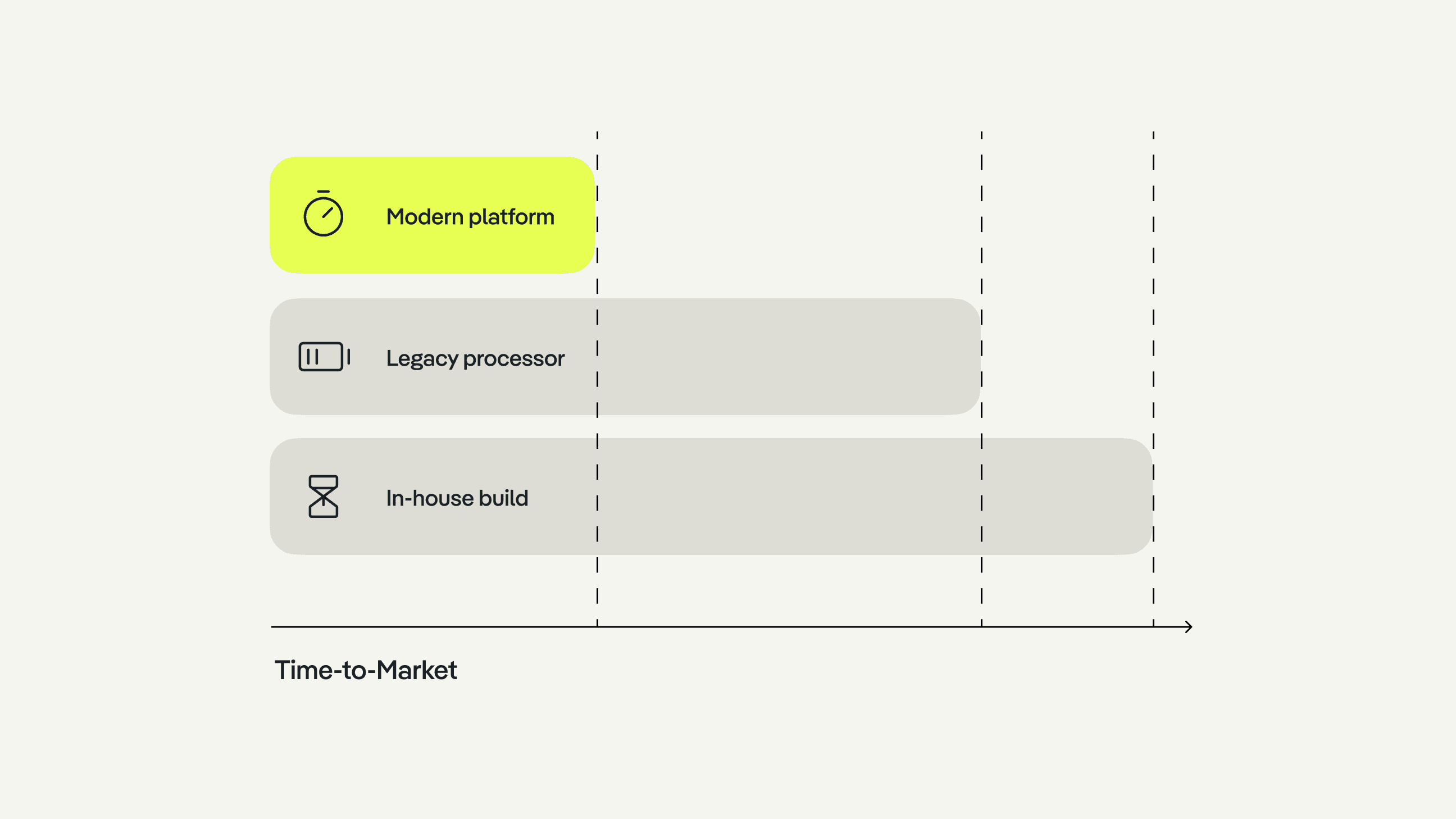
Time-to-market is the real filter
Nikolai's advice to anyone facing this decision: prioritize how fast you can validate whether the model works for your business before committing further resources. A phased approach exists precisely to make that validation cheap.
A strong brand only counts if the execution backs it up
Both panelists were explicit that they wanted a partner with a name people already trusted, but that name alone wasn't enough. What tipped the decision was pairing that brand with modern processes and fast execution, not one without the other. For Circula, that combination, proven and fast, was what made the partner choice easy.
Depth of integration is an organizational decision, not just a technical one
Daniel's point was that the hardest part of embedding isn't the API. It's everything around it: sales processes, incentive structures, operations teams, all of which need to change before the product ships, not after. The flexibility to keep adjusting features and integration depth after launch, as real merchant feedback comes in, matters just as much as the initial build.
Ready to see what a card product looks like for you?
Pliant lets software platforms add card programs without building card infrastructure from scratch. Explore CaaS & BaaS.