Best provider to launch a card program for a B2B product in 2027
Adding cards to your B2B product looks like a feature on the roadmap. In practice, it's a partner decision. The card issuing platform you choose shapes how fast you launch, how much your team builds and runs, and which markets you can serve from day one.


- What is a card program for a B2B product?
- Five types of card program providers
- The seven providers at a glance
- 7 best providers to launch a card program in 2026
- Embedded or white-labeled: which fits your product?
- How to choose the right provider
- CaaS vs BaaS: what's the difference?
- Ready to get started?
- Best provider to launch a card program: FAQs
Adding cards to your B2B product looks like a feature on the roadmap. In practice, it's a partner decision. The card issuing platform you choose shapes how fast you launch, how much your team builds and runs, and which markets you can serve from day one.
So how do you choose? It comes down to one question: how much of the card product do you want to own?
Some providers give you cards, banking features, and credit in one platform, with room to choose how much you build. Others give you issuing infrastructure and expect your team to build the experience on top. Neither approach is wrong. The right fit depends on your roadmap, your engineering capacity, and your customers' markets.
In this post, we'll compare seven providers on what you get out of the box, who owns credit and UX, who carries compliance, and how long launch takes. Then we'll give you seven questions to test any provider against your own requirements.
What is a card program for a B2B product?
A card program is everything behind a card product: issuing, limits, billing, repayment, compliance, and support. An embedded card program puts that product inside your own software, so your customers pay from the workflow they already use.
For your product team, that's a new service layer without becoming a regulated issuer. Your provider holds the regulated parts. You decide how much of the product, the UX, and the operations you own. If you're earlier in the process, our guide to launching a credit card in five steps covers the basics.
Five types of card program providers
The market splits into five categories. Each one asks something different of your team.
Full product platforms are CaaS-first providers that also include BaaS functionality, such as business accounts and international transfers, in a single platform. Pliant is here.
Cards-as-a-Service (CaaS) providers supply card-issuing infrastructure focused on schemes, processing, and compliance. You build the product and UX. Enfuce and Mynt are here.
Banking-as-a-Service (BaaS) providers offer broader banking capabilities, with card issuing as one component of a larger stack. Swan and Solaris are here.
Issuing and payments infrastructure gives you low-level primitives to build custom card products from scratch. Stripe and Adyen are here.
Expense software such as Cardlay and Inlogik sits on top of existing cards. It manages spend but doesn't issue cards or provide banking, so it isn't a route to your own card program.
The seven providers at a glance
| Provider | Type | Best for | Credit support | End-user product |
|---|---|---|---|---|
| Pliant | Full product platform | Product teams that want to embed cards and choose how much to build | Native | Included |
| Enfuce | CaaS | Teams that want strong processing and will build the product | Partner-sourced | Build yourself |
| Mynt | CaaS | Nordic-focused programs | Partner-sourced | Build yourself |
| Swan | BaaS | Teams building around accounts and payments | Typically none | Build yourself |
| Solaris | BaaS | Teams that want modular banking infrastructure | Typically none | Build yourself |
| Stripe Issuing | Issuing infrastructure | Engineering-led teams building from scratch | None | Build yourself |
| Adyen | Issuing infrastructure | Engineering-led teams building from scratch | None | Build yourself |
7 best providers to launch a card program in 2026
A quick note on how we compared. Pliant publishes this article, so we have a point of view. We kept the comparison to criteria you can check with each provider, and every provider below gets the same structure: who it fits, key features, what works in its favor, and what to weigh. Confirm current details directly before you decide.
1. Pliant: best for teams that want a modular card program
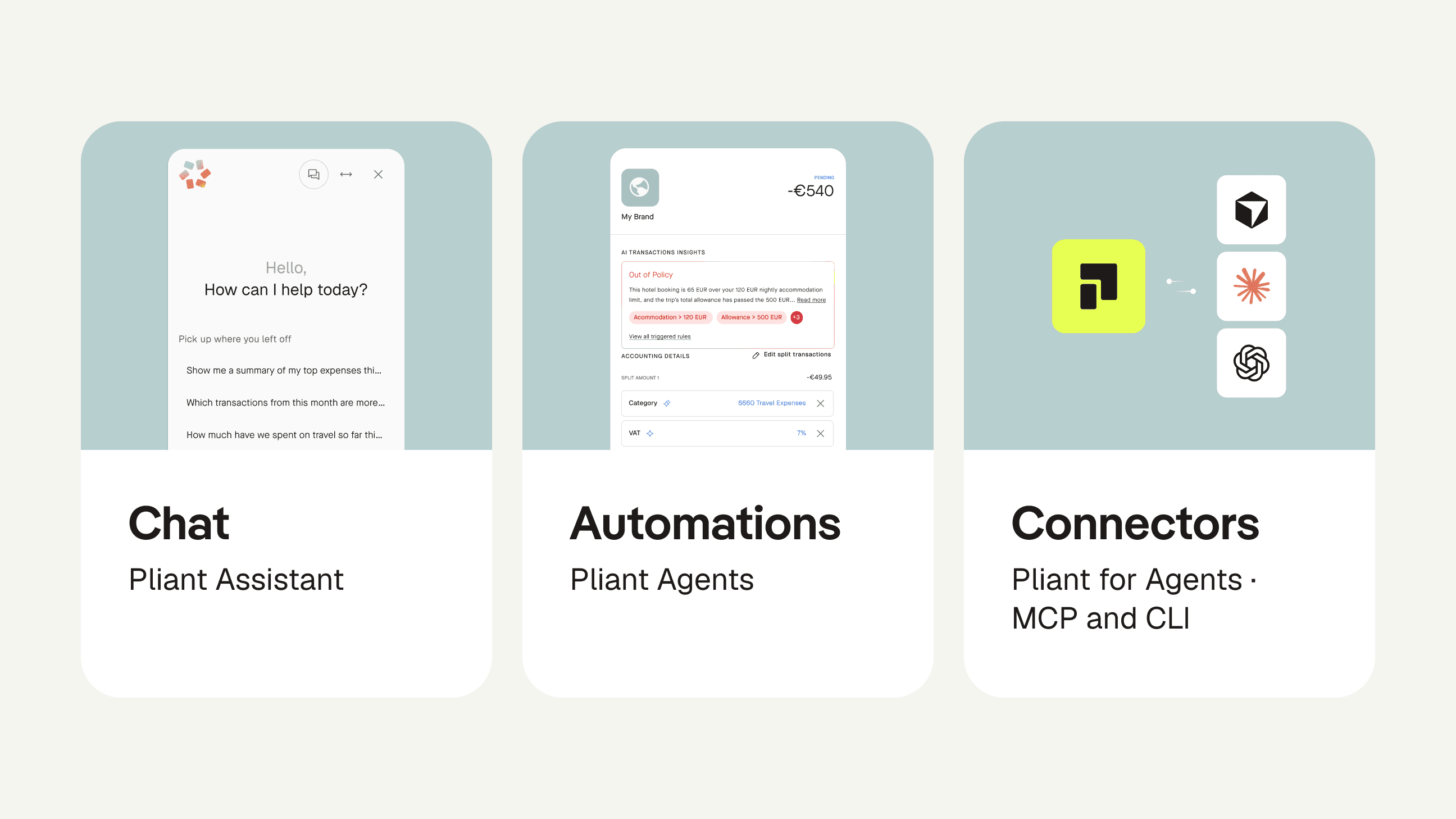
Pliant is a modular, CaaS-first card platform with selected BaaS capabilities. You decide how much to take and how deeply to embed it. Launch with white-label apps and UI components, embed through the partner API, or start with one and move to the other as your product grows. Cards, business accounts, international transfers, and FX share one platform, so you add banking features without a separate stack. Think ERPs, invoice management, and travel and expense software.
Key features
Card issuing with business accounts, international transfers, and FX
White-label apps and UI components, or embedding through the partner API
BIN sponsorship, with Visa, Mastercard, or both from the same setup
Daily operations handled for you, including reconciliation, settlements, and scheme updates
Virtual and physical cards, with credit funding or prepaid and debit with credit lines layered in
Pros
Branded apps or API embedding, with room to move from one to the other
One platform, so fewer integrations and one accountable partner
Native corporate credit with embedded credit lines in the EEA, the UK, and the US
Cons
Not a full banking stack
Embedding through the API takes more development than white-label
Less low-level control than building from scratch on issuing infrastructure
2. Enfuce: best for processing-led teams that will build the product
Enfuce is a card-issuing specialist known for its processing strength. It suits teams with product and design capacity that want to own the whole customer experience and need a dependable issuing engine underneath.
Key features
Card-issuing infrastructure focused on schemes, processing, and compliance
Strong processing capabilities
Product design, UX, and workflows owned by the partner
Pros
Strong processing foundation
Schemes, processing, and compliance handled for you
Full control over product design and UX
Cons
You build and maintain the whole front end
No US coverage
Credit comes through a partner
3. Mynt: best for Nordic-focused programs
Mynt is a classic CaaS provider with a strong focus on the Nordic region and an expansion underway. It suits programs that serve Nordic customers first and are happy to build the product layer themselves.
Key features
Card-issuing infrastructure focused on schemes, processing, and compliance
Nordic focus, with expansion underway
Product, UX, and workflows built by the partner
Pros
Regional focus on the Nordics
Schemes, processing, and compliance handled for you
Expansion beyond the region underway
Cons
Coverage concentrated in one region
Credit comes through a partner
Product, UX, and workflows are yours to build
4. Swan: best for teams building around banking primitives
Swan is a BaaS provider built around banking primitives such as accounts and payments. It suits products where the account is the center and the card is one feature among several.
Key features
Banking primitives such as accounts and payments
Card issuing as one component of a larger stack
User workflows designed and operated by the partner
Pros
Accounts, payments, and cards from one provider
Compliance handled for you
Freedom to shape user workflows
Cons
Cards are secondary in the stack
Credit typically not offered
You design and run the workflows
5. Solaris: best for modular banking infrastructure
Solaris provides modular banking infrastructure for partners who want to assemble their own financial product. It suits teams that already know which banking components they need and want to pick them one by one.
Key features
Modular banking infrastructure
Broader banking capabilities, with card issuing as one component
UX and operational workflows built and managed by the partner
Pros
Modular, pick-what-you-need setup
Banking capabilities alongside cards
Compliance handled for you
Cons
Cards are secondary to the banking modules
Credit typically not offered
You build the UX and operations
6. Stripe: best for engineering-led teams building from scratch
Stripe provides low-level payments and issuing primitives. It suits engineering-led teams that want full control of how the card product works and are prepared to build and run it end to end.
Key features
Low-level payments and issuing primitives
Building blocks for custom card products from scratch
Engineering and operations owned by the partner
Pros
Full freedom to design the card experience
Issuing alongside payments capabilities
No imposed product framework
Cons
Significant engineering and operational effort
No credit, customization, or UI/UX as standard
Compliance shared with you
7. Adyen: best for teams running their own product on payments infrastructure
Adyen offers issuing and payments infrastructure. It suits teams that want to build and operate the whole card product themselves, including the banking setup behind it.
Key features
Issuing and payments infrastructure
End-user product, workflows, and banking setup built and managed by the partner
No customization or UI/UX as standard
Pros
Issuing and payments from one provider
Full control over product and workflows
You decide the banking setup
Cons
You build and run the product, workflows, and banking setup
No credit, customization, or UI/UX as standard
Compliance shared with you
Embedded or white-labeled: which fits your product?
Before you compare providers in detail, decide how deeply the card program should sit inside your product. The choice sets your technical effort and the look and feel your customers see.
A white-labeled card program brands a pre-built card product from your provider. It deploys faster and needs less development on your side.
An embedded card program integrates into your platform through the API. It gives you a tailored experience and more control over features, and it asks for more development resources.
Pliant supports both routes. White-label apps and UI components get you live faster with less development, and the partner API lets you embed the program in your own product. You can start with white-label and move to embedded later, so your first launch doesn't lock in your long-term setup. Infrastructure providers start you at the embedded end by default, because there's no finished product to brand. Our guide to white-label credit cards goes deeper on the trade-offs.
How to choose the right provider
Seven questions separate these models most clearly. Ask every provider on your shortlist.
1. What do you get out of the box?
A full product platform gives you working building blocks, such as cards, accounts, and credit, and lets you choose how much to build on top. Infrastructure providers give you components. Ask what your customers can use on day one, and what your team still has to build.
2. Who owns credit and lending?
If your customers need credit lines, ask whether credit is native, partner-sourced, or absent. Native credit means one provider handles limits, billing cycles, and repayment logic. Partner-sourced credit adds another party to manage.
3. Who owns UX and workflows?
Some providers supply the interface and approval flows. Others expect you to design and run them. Count the engineering and design weeks that ownership implies.
4. Who carries compliance?
Check which entity issues the cards and which certifications it maintains. Ask whether the provider sponsors your BIN or you need your own scheme membership. Then ask what onboarding and monitoring support is included.
5. How long until launch?
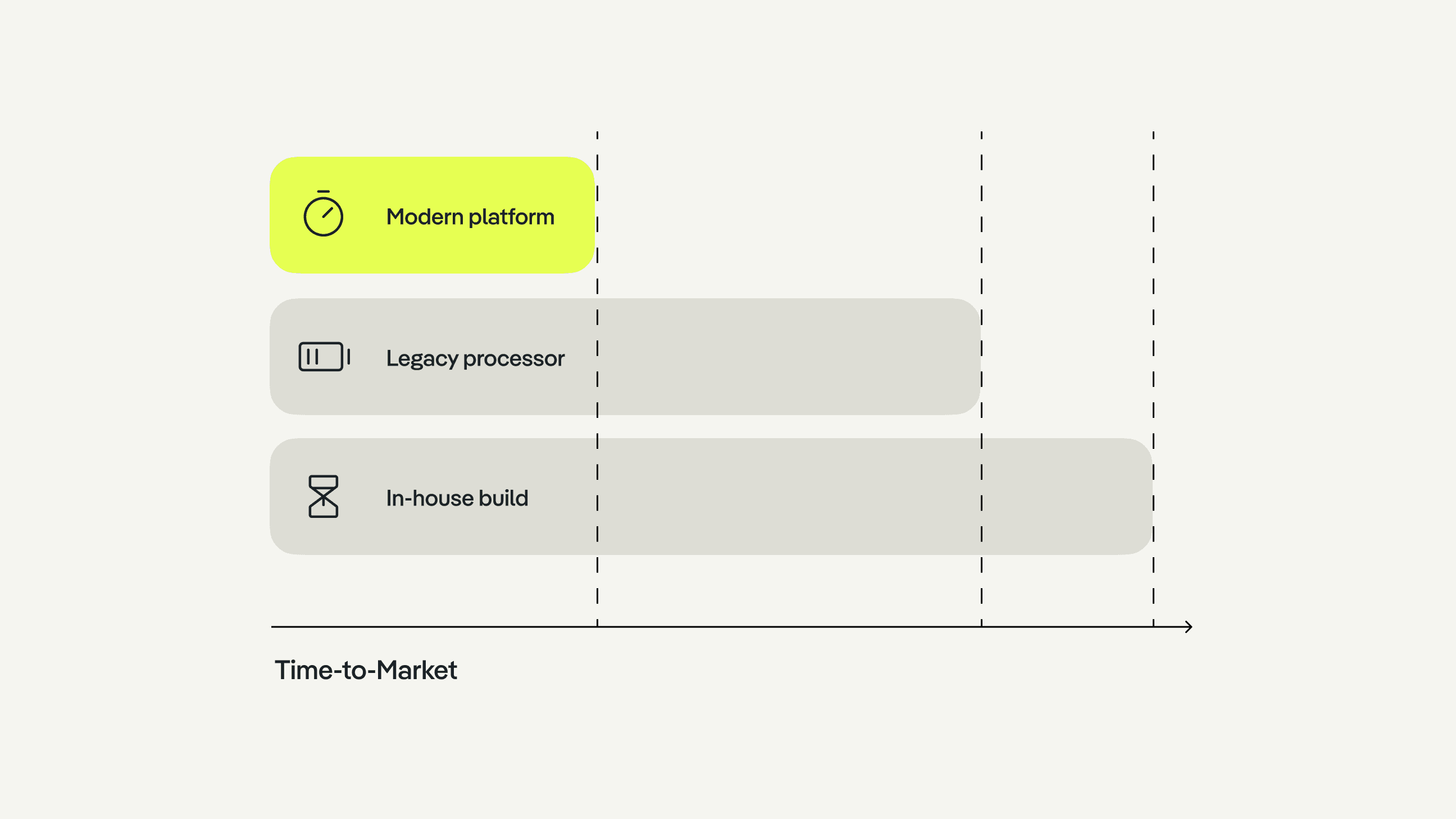
Full product platforms launch in weeks. Infrastructure and BaaS builds typically take months. Match that to your roadmap and your sales commitments.
6. How much operational complexity will you carry?
Every layer you own is a layer you staff. Ask who handles reconciliation, settlements, scheme and wallet updates, and billing and repayments. Add up the support, operations, and monitoring work behind each option, not just the integration.
7. Where do your customers operate?
Check coverage across the EEA, UK, and US, and the currencies you need. A provider that's strong in one region may not reach the next one on your roadmap.
CaaS vs BaaS: what's the difference?
Both models let you launch financial products without building regulated infrastructure yourself. CaaS providers focus on card issuing and program operations. BaaS providers center on broader banking capabilities like accounts and payments, with cards as one component.
Pliant follows a CaaS-first approach and adds selected BaaS capabilities, including business accounts, international transfers, and FX. You get those features without taking on a full banking stack. That means fewer integrations, clearer ownership, and a faster path from idea to live card program.
Ready to get started?
If you're weighing providers, start with one conversation. Pliant's Cards-as-a-Service team can walk you through how an embedded card program would look inside your product, from white-label apps to credit, and what a launch in weeks takes on your side.
Talk to our Cards-as-a-Service team
Best provider to launch a card program: FAQs
What's the best provider to launch a card program for a B2B product?
It depends on how much you want to build. If you want to embed cards and credit, with the option to launch white-label first and move to your own front end later, a full product platform like Pliant fits. If you have engineers ready to build the product and want a processing specialist underneath, Enfuce or Mynt are worth a look. If your product centers on accounts and payments, Swan or Solaris cover that ground. And if you want to build every layer yourself, Stripe and Adyen provide the primitives.
How long does it take to launch a card program?
With a full product platform like Pliant, weeks. With CaaS, BaaS, or issuing infrastructure providers, typically months, because your team builds the product, UX, and workflows.
Do I need to be a Visa or Mastercard member to launch a card program?
Not with Pliant. Pliant is already a member of Visa and Mastercard and sponsors your BIN, so you can launch without becoming a member first and add programs or regions as you grow. If you're already a principal scheme member, Pliant can act as the service provider for the operating layer, and your scheme membership stays where it is.
Can I move from a white-label to an embedded card program later?
With Pliant, yes. You can launch with white-label apps and UI components, then move to embedding the program through the partner API as your product grows.