Top 5 Stripe Issuing alternatives for 2027
Compare 5 Stripe Issuing alternatives which cover the range, from a modular card platform to broader banking infrastructure. Read more!


- Four differences that shape your choice
- Five providers, side by side
- 1. Pliant: best for teams that want a modular card program
- 2. Enfuce: best for teams that will build the product on processing-strong infrastructure
- 3. Mynt: best for Nordic-focused programs
- 4. Swan: best for teams building around banking primitives
- 5. Solaris: best for modular banking infrastructure
- Match your priority to a provider
- Decide how much you want to build
- Stripe Issuing alternatives: FAQs
Stripe provides payments and issuing primitives for building custom card products from scratch. It also requires engineering and operational effort to build a full card program.
That's the trade-off behind the choice. Some providers hand you the building blocks. Others cover more of the stack, or carry more of the compliance work. The right choice depends on how much you want to build.
These five providers cover the range, from a modular card platform to broader banking infrastructure:
Pliant
Enfuce
Mynt
Swan
Solaris
We compared every provider on the same criteria: what you get out of the box, credit support, who owns UX and workflows, and who carries compliance. Where a detail isn't known, we left it out rather than guess.
Four differences that shape your choice
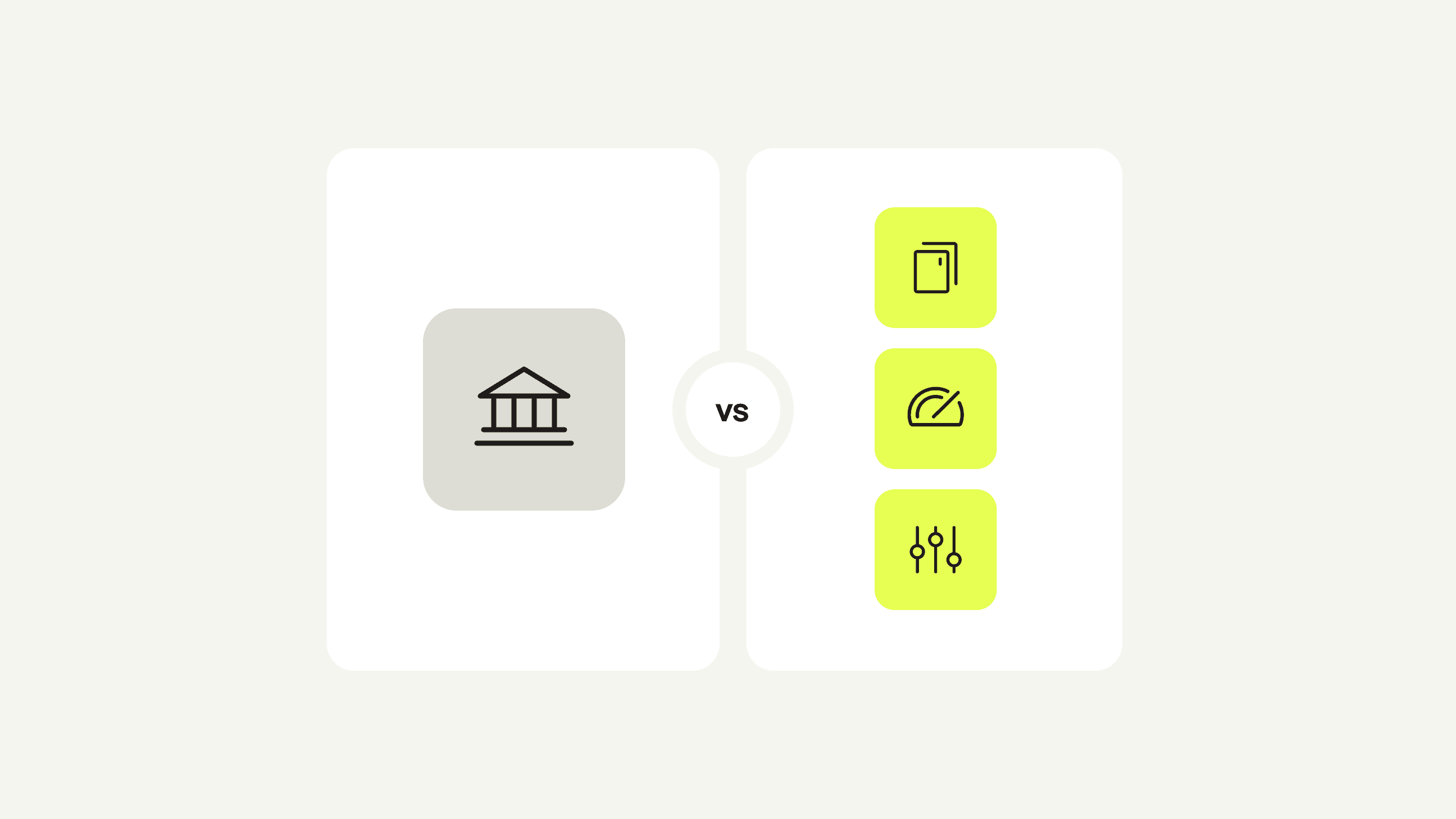
Four differences stand out when you compare Stripe with the providers below.
1. What your team builds
On issuing and payments infrastructure, the end-user product is yours to build, and UX and workflows are partner-owned. Customization and UI/UX are not provided as standard. Other models include the product or leave part of it to you.
2. Credit
Credit support on Stripe is none. Among the alternatives, credit is native at Pliant, partner-sourced at Enfuce and Mynt, and typically not offered at Swan and Solaris.
3. Time to launch
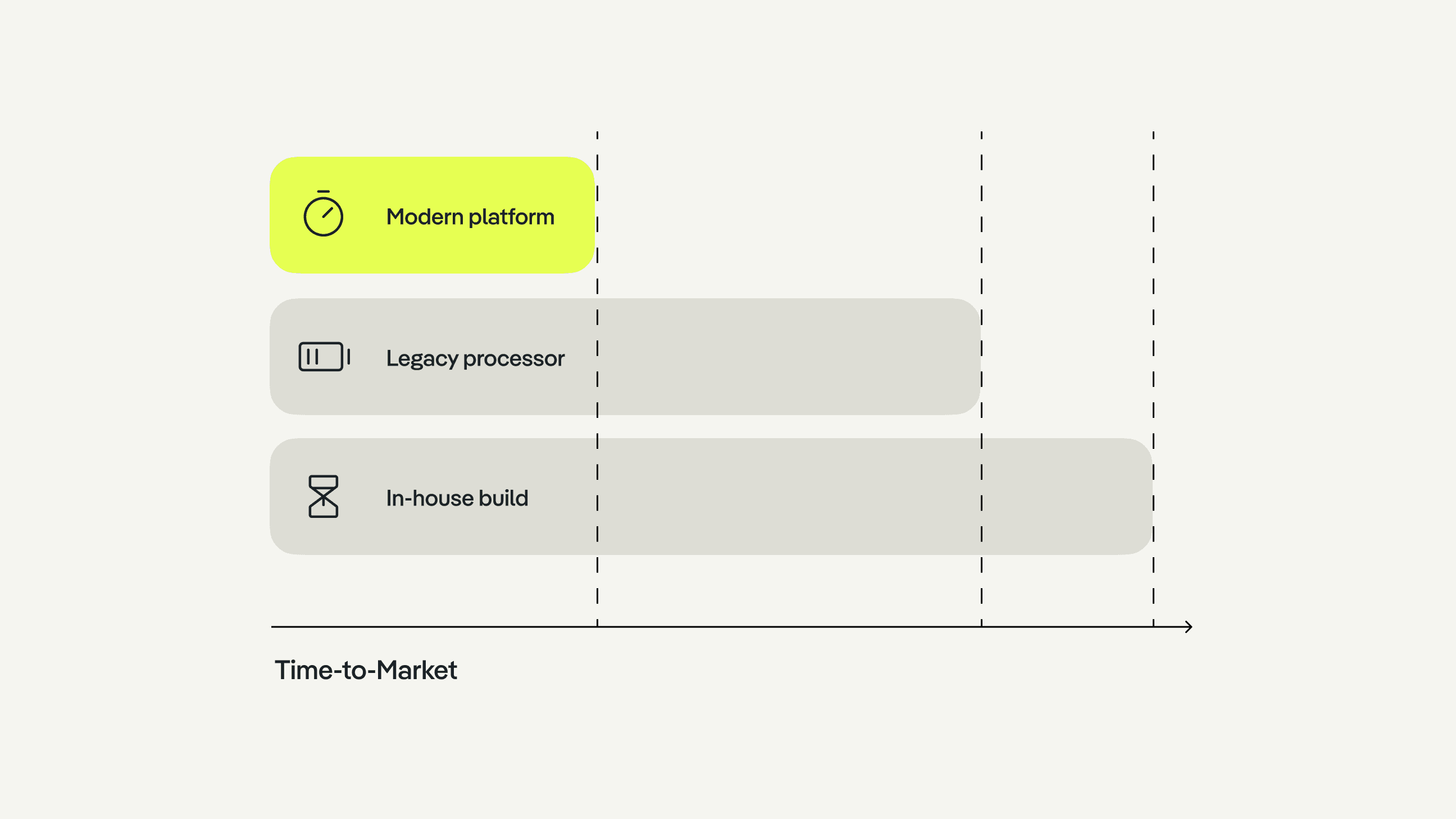
Builds on issuing and payments infrastructure typically take months. Full product platforms launch in weeks.
4. Who carries compliance
On issuing and payments infrastructure, compliance is shared between you and the provider. CaaS and BaaS providers handle it, and a full product platform provides it.
Five providers, side by side
| Provider | Who it suits | What stands out | Credit |
|---|---|---|---|
| Pliant | Teams that want a modular card program they can launch white-label or embed | White-label apps or partner API; cards, accounts, transfers, and FX in one platform; BIN sponsorship | Native |
| Enfuce | Teams that will build the product on infrastructure strong in processing | Strong processing; schemes, processing, and compliance handled for you | Partner-sourced |
| Mynt | Nordic-focused programs | Nordic focus with expansion underway; schemes, processing, and compliance handled for you | Partner-sourced |
| Swan | Teams building around accounts and payments | Banking primitives with cards as one component; compliance handled for you | Typically none |
| Solaris | Teams that want modular banking infrastructure | Modular banking infrastructure with cards as one component; compliance handled for you | Typically none |
1. Pliant: best for teams that want a modular card program
A note before we start: Pliant publishes this article, so we have a point of view. We kept the comparison to criteria you can check with each provider.
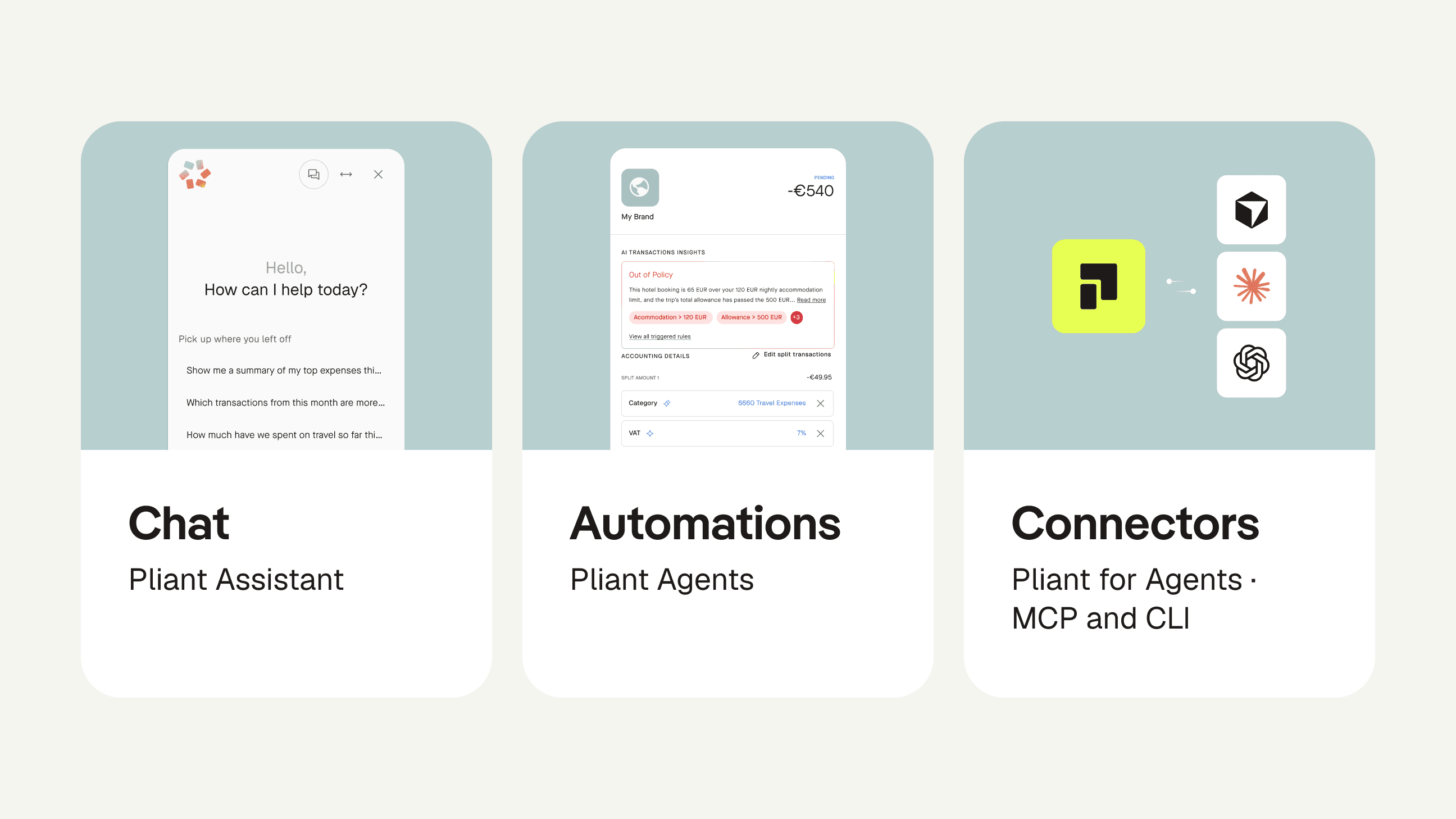
Pliant is a modular, CaaS-first card platform with selected BaaS capabilities. You decide how much to take and how deeply to embed it. Launch with white-label apps and UI components, embed through the partner API, or start with one and move to the other as your product grows. Cards, business accounts, international transfers, and FX share one platform, so you add banking features without a full banking stack.
What you get
Card issuing with business accounts, international transfers, and FX
White-label apps and UI components, or embedding through the partner API
BIN sponsorship, with Visa, Mastercard, or both from the same setup
Daily operations handled for you, including reconciliation, settlements, and scheme updates
Virtual and physical cards, with credit funding or prepaid and debit with credit lines layered in
How Pliant compares with Stripe Issuing
The clearest difference is what your team builds. With Stripe, the end-user product is yours to build. With Pliant, the product is included: white-label apps and UI components let you launch branded apps faster, and the partner API lets you embed the program in your own product. You can start with white-label and move to embedded later.
Credit is the second difference. Pliant offers native credit with embedded credit lines in the EEA, the UK, and the US, while Stripe offers none. Limits, billing cycles, and repayment run end to end.
The third is launch time and compliance. Pliant launches in weeks, where Stripe takes months, and Pliant provides compliance where Stripe shares it with you. Pliant is also already a member of Visa and Mastercard, so you don't have to become one first.
The trade-off is scope. Pliant isn't a full banking stack, and embedding through the API takes more development than launching white-label.
2. Enfuce: best for teams that will build the product on processing-strong infrastructure
Enfuce focuses on card-issuing infrastructure and is strong in processing. It suits teams that will build the product themselves and want an issuing partner with that strength.
What you get
Card-issuing infrastructure focused on schemes, processing, and compliance
Strength in processing
Product design, UX, and workflows owned by you
How Enfuce compares with Stripe Issuing
Enfuce is strong in processing, and schemes, processing, and compliance sit with Enfuce, whereas on Stripe compliance is shared with you. Credit comes through a partner, where Stripe offers none. Product design, UX, and workflows stay with your team, so you shape the experience around your product.
Enfuce's coverage doesn't include the US, so check it against your plans.
3. Mynt: best for Nordic-focused programs
Mynt is a classic CaaS provider with a strong focus on the Nordic region and an expansion underway. It suits programs that serve Nordic customers first and will build the product layer themselves.
What you get
Card-issuing infrastructure focused on schemes, processing, and compliance
Nordic focus, with expansion underway
Product, UX, and workflows owned by you
How Mynt compares with Stripe Issuing
Mynt handles schemes, processing, and compliance, whereas on Stripe compliance is shared with you. Credit comes through a partner, where Stripe offers none. The end-user product, UX, and workflows stay with your team.
Mynt's focus is the Nordic region, with an expansion underway, which suits a program that starts there. If you need other markets, check its coverage against your roadmap.
4. Swan: best for teams building around banking primitives
Swan is a BaaS provider focused on banking primitives such as accounts and payments. Card issuing is one component of that broader stack.
What you get
Banking primitives such as accounts and payments
Card issuing as one component of a larger stack
User workflows designed and operated by you
How Swan compares with Stripe Issuing
Swan adds banking primitives, such as accounts and payments, with cards as one component, while Stripe provides payments and issuing primitives. Compliance is handled by Swan, whereas on Stripe it's shared with you. You design and operate the user workflows around your product.
5. Solaris: best for modular banking infrastructure
Solaris provides modular banking infrastructure, with card issuing as one component of its broader banking capabilities.
What you get
Modular banking infrastructure
Broader banking capabilities, with card issuing as one component
UX and operational workflows owned by you
How Solaris compares with Stripe Issuing
Solaris offers modular banking infrastructure with cards as one component, while Stripe provides payments and issuing primitives. Compliance is handled by Solaris, whereas on Stripe it's shared with you. UX and operational workflows stay with your team.
Match your priority to a provider
Find your priority in the first column.
| Your priority | Consider | What the comparison shows |
|---|---|---|
| A card program live in weeks, with a branded experience | Pliant | White-label apps and UI components, with embedding through the partner API when you're ready. Launch takes weeks. |
| Credit lines for your customers | Pliant | Native corporate credit with embedded credit lines in the EEA, the UK, and the US. Enfuce and Mynt source credit through a partner. |
| Building the card program yourself | Stripe Issuing | Payments and issuing primitives for building custom card products from scratch. |
| Building the product with strong processing underneath | Enfuce | Strong processing, with schemes, processing, and compliance handled for you. |
| A program that serves the Nordics first | Mynt | Nordic focus, with expansion underway. |
| A product built around accounts and payments | Swan or Solaris | Banking capabilities with cards as one component. |
| US coverage | Pliant | Live in the EEA, the UK, and the US. Enfuce's coverage doesn't include the US, so check other providers directly. |
Four checks before you switch
What you've built: List the card experiences and workflows your team built on primitives. Some providers include a ready-made product. Others leave it with your team.
Credit: Decide whether you want credit lines, and whether you want them native or through a partner.
Compliance: Ask which parts move to the provider and which stay with you.
Markets and currencies: Check coverage across the EEA, UK, and US, and the currencies you need.
Decide how much you want to build
The best Stripe Issuing alternative is the one that matches how much you want to build. If you want to build from scratch and have the team for it, Stripe still fits. If you want card-issuing infrastructure and will build the product yourself, look at Enfuce or Mynt. If your product centers on accounts and payments, look at Swan or Solaris.
And if you'd rather launch with credit and a branded experience, with the option to embed deeper later, Pliant's modular card platform is built for that. Talk to the Cards-as-a-Service team to see how an embedded card program would look inside your product.
Stripe Issuing alternatives: FAQs
What is the best Stripe Issuing alternative?
It depends on how much you want to build. If you want to embed cards and credit, with the option to launch white-label first and move to your own front end later, Pliant fits. Enfuce and Mynt suit teams that will build the product on card-issuing infrastructure, and Swan and Solaris suit products built around accounts and payments.
Is there a Stripe Issuing alternative with credit?
Yes. Pliant offers native corporate credit with embedded credit lines across the EEA, the UK, and the US. Enfuce and Mynt source credit through a partner, and Swan and Solaris typically don't offer it.