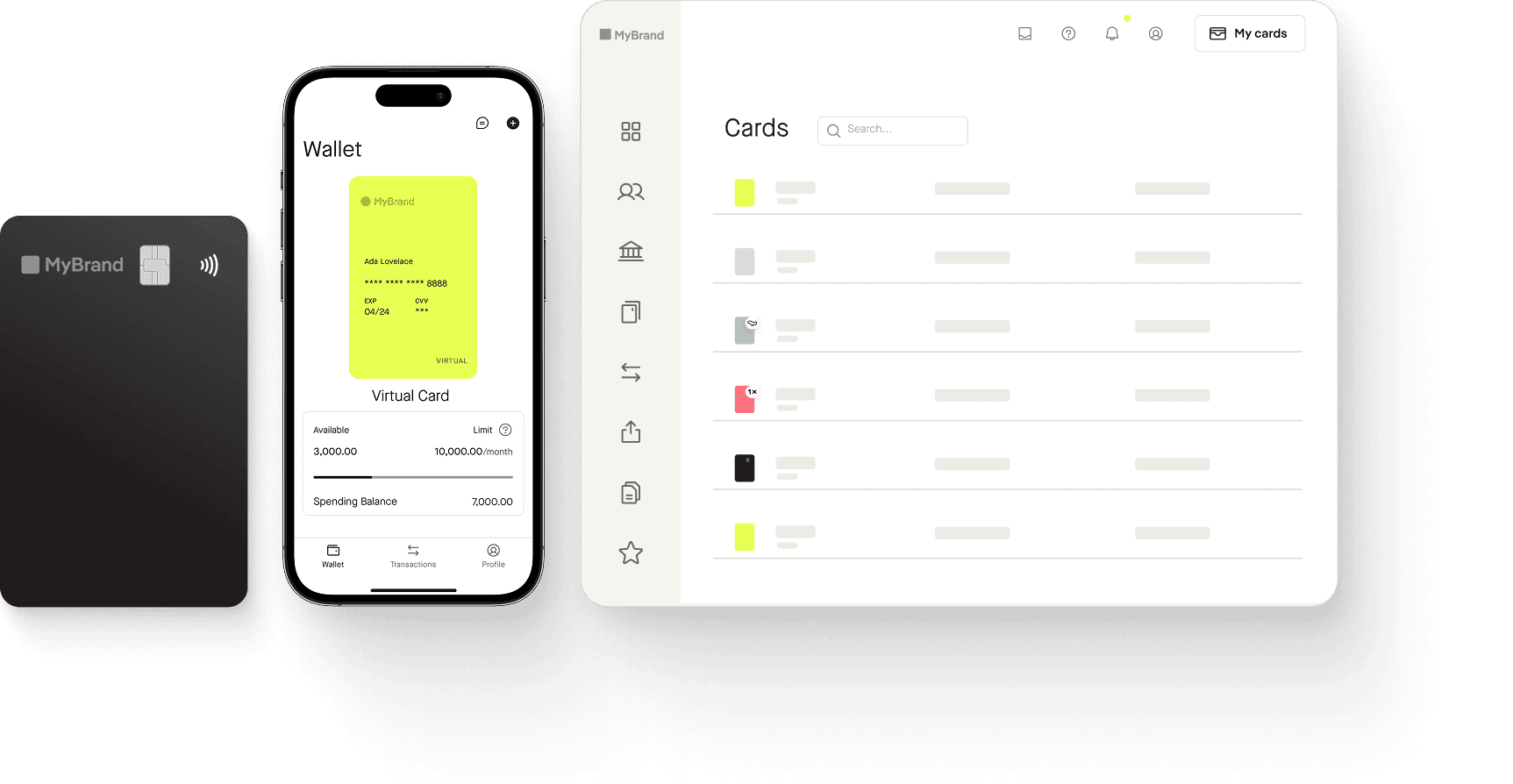
Insurance Claim Cards
Claim payouts on autopilot, locked to policy
Automate claims workflows, lower processing costs, and give claimants faster access to funds, without replacing what already works.
Cards that plug into your claims workflow
Each claim runs on one card and one record, from approval to period-end reconciliation.

Automate claims payouts
Cut payout time from days to minutes and free your finance team from manual review.

Give claimants funds they can use right away
Claimants can pay in minutes, with no out-of-pocket spend and no app to download.

Keep claims, finance, and audit on one record
Claim data is attached to every card at issuance, so nothing gets reconciled by hand.

Stop fraud before the money moves
Each payout is locked to the right merchant, category, region, and amount.

Payouts that pay you back
Cashback, early-payment discounts, and credit lines, built into the payment itself.

Your brand, at the moments that matter
The whole claimant experience is white-labeled, so every touchpoint builds trust in you.
Three ways to pay out a claim. One card program.
Each model fits a different kind of claim, and all three run on the same card program.
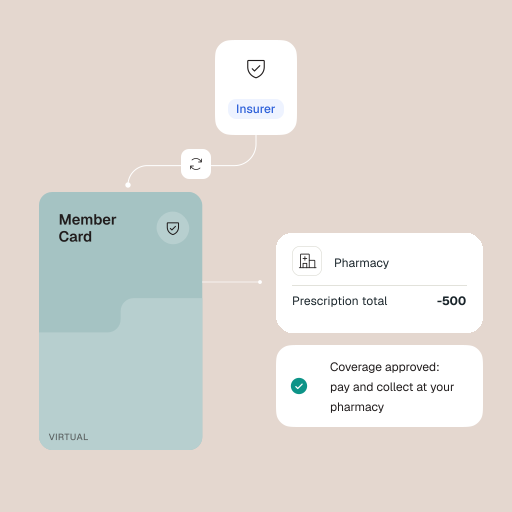
Member Card
Policy-linked virtual cards in the member’s wallet pay for ongoing care at hospitals and pharmacies.
Merchant rules and limits mirror the member’s coverage
Paid from your funds at the point of care
Copay charged automatically to the member’s own card
Instant Payouts
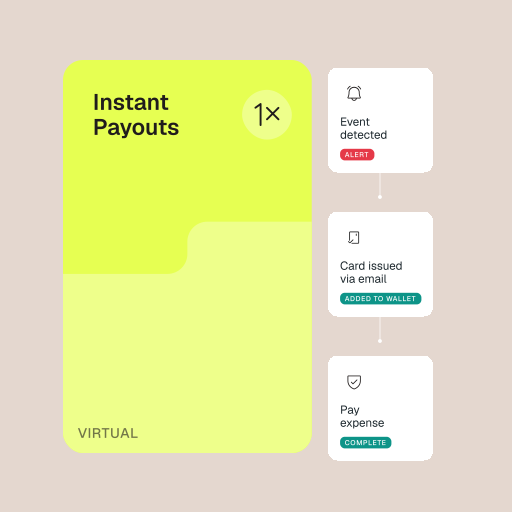
Event-triggered cards automatically pay out claims within preset limits and merchant categories.
Emailed after a covered event such as a flight delay
Claimants add the card to their wallet with one-step identity verification
Unused funds return to your account
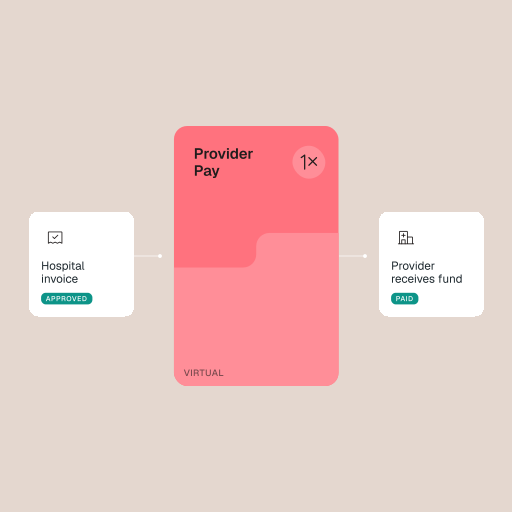
Provider Pay
Insurer-initiated cards to replace guarantee-of-payment letters and wires for provider invoices.
Single-use cards, issued for the exact invoice amount
Locked to the invoicing provider
Each payment carries its claim data for reconciliation
Used by claims ops and TPA agents
The claim is digital. The payment isn't. Pliant closes that gap
Every payout method gets money to a claimant. Only one also enforces the policy when the money is spent.
| Pliant Insurance Claim Card | Reimbursement | Bank transfer | Instant transfer (RTP, FedNow, SEPA Instant, PayPal, Venmo) | |
|---|---|---|---|---|
| Funds usable in | Minutes | Days to weeks | 1–5 days | Seconds |
| Claimant never pays first | Yes | No | No | No |
| Works without bank details or an account | Yes | No | No | No |
| Where funds can be spent | Locked to the claim | Checked after payment | Any merchant | Any merchant |
| Reconciliation | Automatic, per claim | Manual | Manual | No purchase data |
| Cost to the insurer | Low, plus up to 1% cashback | Highest handling cost | Wire and FX fees | Low fee |
Payouts, reinvented for the wallet era

Push cards with Web Push Provisioning
Recipients add a card to Apple Pay or Google Pay in one click on a web page. There’s no app to download, and they never handle the real card number.

Deliver cards per email
Issue a card to anyone outside your organization by email. No account setup, and no need to collect claimant details first.

Send direct wallet links
Send a personal link, and the claimant adds their card to a wallet, with no account, password, or app. Nobody reads card numbers out by phone or sends them by email.
Claim cards for every line of insurance
From a delayed flight to a vet bill, a claim card pays for what the policy covers.

Issue a card the moment a flight is delayed or luggage is lost, so members can pay for what they need while abroad.

Members pay at the point of care, copays go to their own card, and the claim closes with structured data. Hospital invoices are paid directly with single-use cards.

Cover towing, repairs, or a rental with a card locked to the right merchants and the exact amount.

Members pay the vet from their wallet, with no reimbursement wait.

Pay for emergency accommodation, repairs, or replacement essentials from a card limited to approved merchants.
FAQs
When a claim is approved, manually or via API, a card is issued instantly with the exact amount and restrictions the claim calls for: eligible merchants or categories, geography, and validity period. The cardholder pays online, in store, or with Apple Pay or Google Pay, wherever Visa is accepted. Every transaction links back to the claim and reconciles automatically.
You do, whether you're an insurer, TPA, or assistance company. Cards are funded from a prefunded account or a flexible credit line, with limits set per policy or per claim. Unused funds never leave your account.
Members never pay first and claim back. They add their personal card once. When a covered service includes a copay or deductible, the split is calculated automatically. Your share is paid from the claims card, the member's share is charged to their own card, and both sides are documented for reconciliation. If a claim is declined, uncovered amounts are charged to the member's card the same way.
Every payout is a card transaction tied to an approved claim, so fake claims can't be cashed out. Merchant locks, category (MCC) filters, geographic and time restrictions, and real-time transaction checks are enforced at the moment of payment. Each card is limited to policy-relevant merchants, such as clinics, pharmacies, repair shops, hotels, or emergency suppliers.
Yes. Pliant is a certified PCI DSS service provider and ISO 27001-certified. In Europe, cards are issued by Pliant Oy, an authorized e-money institution supervised by the Finnish Financial Supervisory Authority and a Principal Member of Visa. In the US, cards are issued by Pliant's partner bank (Member FDIC) under a Visa U.S.A. license. Compliance documentation for regulator and audit requests is provided during onboarding.
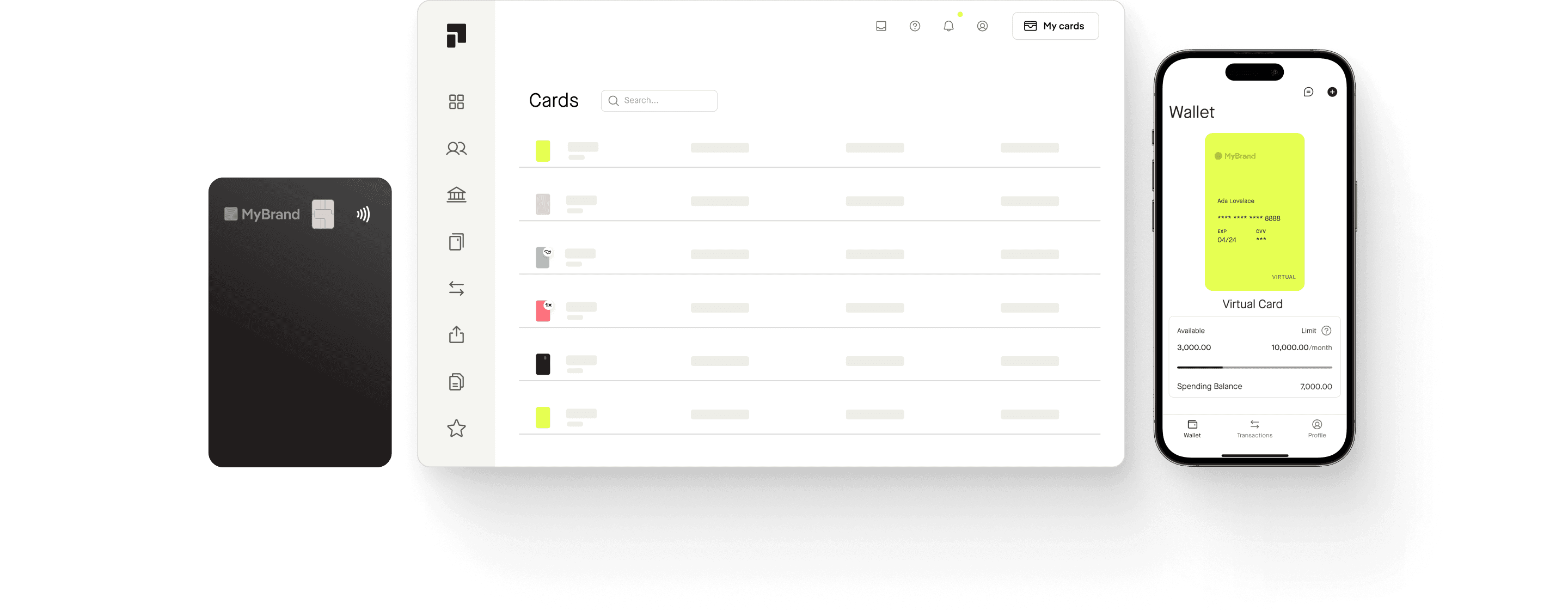
No. Most insurers start with zero integration, issuing and managing cards in the Pliant dashboard. As volumes grow, the same workflows run automatically via API, including integration with your existing claims and core systems.
Start with one workflow. Expand from there.
Add claim cards next to your existing claims systems. Start in the dashboard with zero integration, then move to the API as volumes grow.